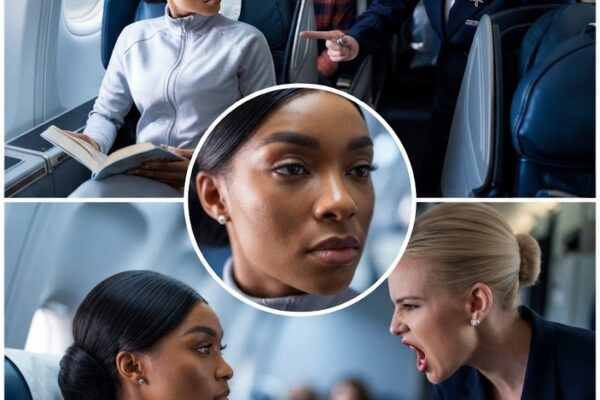
Flight Crew Questions Black Woman’s First-Class Ticket — Airport Security Salutes Her as Judge!
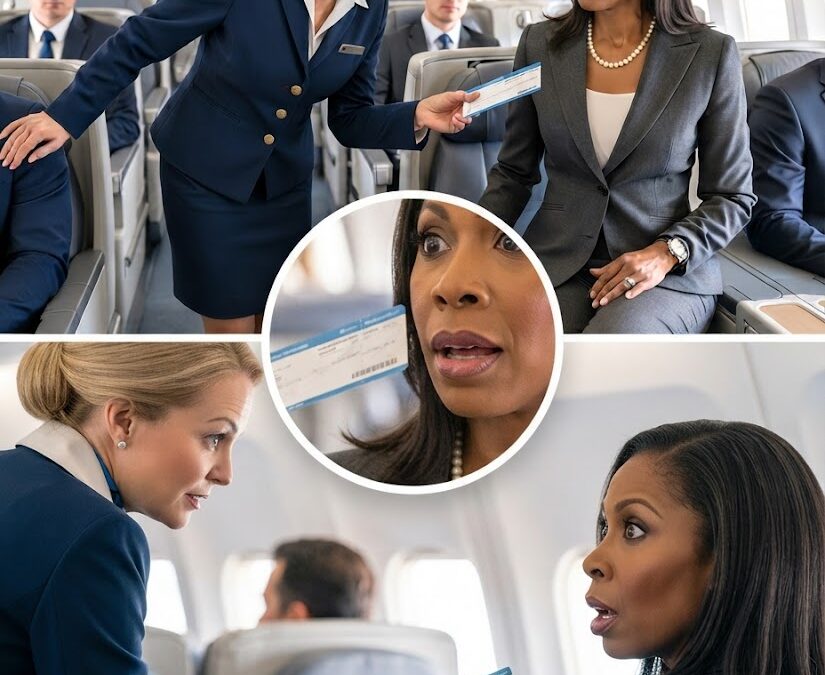
Flight Crew Questions Black Woman’s First-Class Ticket — Airport Security Salutes Her as Judge!.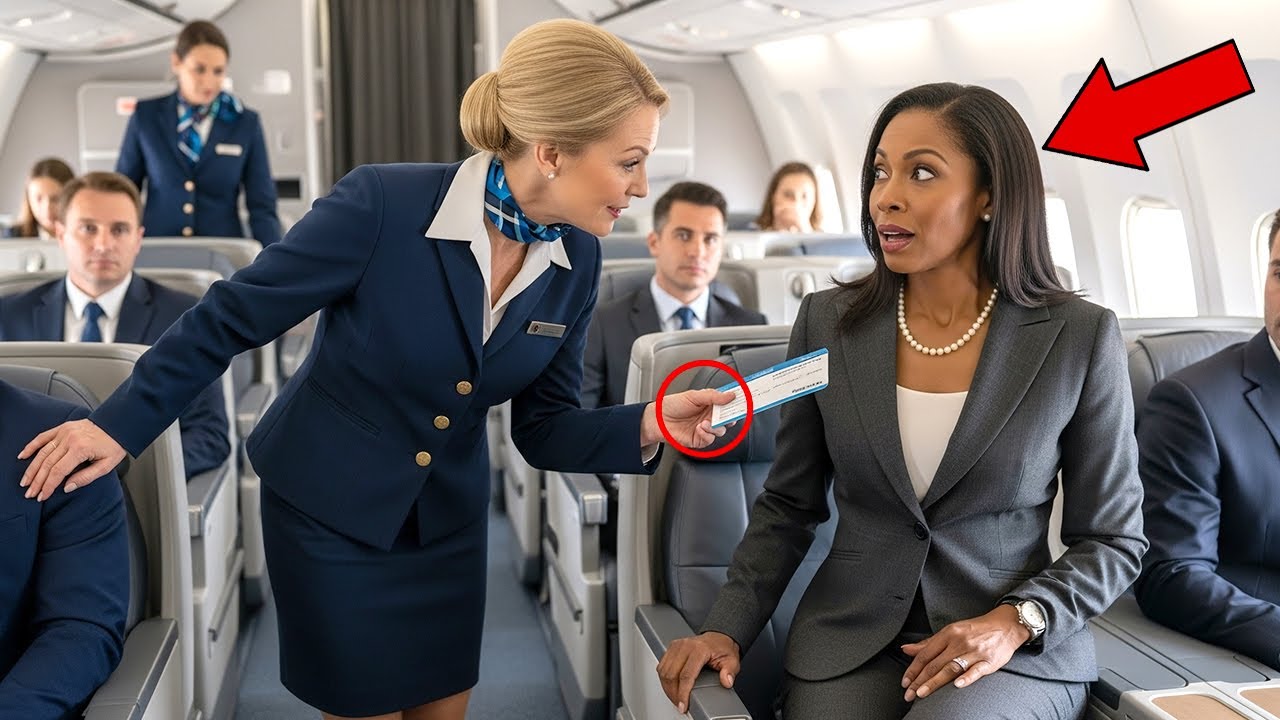
A first class ticket, a seat by the window, and a world of expectation for Judge Adrienne Walker. Flight TA 112 was supposed to be the start of a triumphant trip to London. She was a woman who had spent her life navigating systems of power, a titan of the judiciary, respected for her sharp mind and unshakable integrity. But for one senior flight attendant, the sight of a black woman settling into seat 2A was an anomaly, a problem that needed to be solved. What began with a condescending question would spiral into a public humiliation at the gate. But no one on that plane, not the entitled crew, not the silent passengers, and least of all the judge herself could have predicted the stunning turn of events waiting just outside the aircraft door. A moment was coming that would change all their lives, and an end to us all airline forever. The exclusive Centurion Lounge at John F. Kennedy International Airport’s Terminal 4 was an oasis of curated tranquility. The scent of freshly brewed espresso mingled with the faint expensive smell of leather and a hint of citrus from the complimentary sparkling water. Here the cacophony of the main concourse, the frantic gate announcements, the rolling clatter of suitcases, the chorus of stressed travelers was a distant, muffled memory. This was a space designed to insulate its inhabitants from the common struggles of travel. Among the hushed conversations and the soft clinking of cutlery, sat judge Adrienne Walker. At 54, she possessed a stillness that commanded attention more effectively than any loud voice ever could. Her charcoal gray pants suit was impeccably tailored, its clean lines, speaking of quiet confidence. A simple string of pearls graced her neck, a gift from her late husband. And on her wrist was a modest, elegant watch, it steady, ticking, a reminder of the value of every second. She wasn’t scrolling through her phone or engrossed in a laptop. She was simply observing her dark, intelligent eyes, taking in the scene with the practiced calm of someone who had spent 30 years on a courtroom bench, discerning truth from fiction. She was on her way to London to deliver the keynote address at the international symposium on jurist prudence and human rights. It was the culmination of a career built on merit grit and an unyielding belief in the law as a force for equity. Growing up in a workingclass neighborhood in Queens, Adrienne had been told by a high school guidance counselor that her ambitions of attending Colombia Law were unrealistic. She’d graduated third in her class. When she made partner at a prestigious Manhattan law firm, one of the older cigar chomping partners had patronizingly called her their diversity star. 10 years later, she was a federal judge nominated by one president and confirmed with bipartisan support, a feat that spoke volumes about her reputation. Her journey had taught her that there were two sets of rules in the world. the written law she upheld every day and the unwritten codes of conduct that governed spaces like this one. She understood that her very presence in a firstass lounge on a firstass ticket paid for by the symposium challenged the unspoken assumptions of many. She had felt the subtle shifts in atmosphere, the lingering glances the overly solicitous waiter who seemed surprised by her polite thank you. She had learned to navigate these moments with a grace that was both a shield and a statement. Her flight, Transatlantic Airways flight TA12 to Heathrow, was scheduled to begin boarding soon. She took a final calming sip of her chamomile tea, the warmth spreading through her chest. This trip was important. Her speech was on the topic of implicit bias in the justice system, a subject she knew intimately, not just from academic study, but from lived experience. She had poured months of research and personal reflection into it. This flight was simply the vessel the 9-hour transition between one world of responsibility and another. Boarding for Transatlantic Airways flight TA 1112 to London will now commence for first class passengers at gate B24. A synthesized voice announced breaking the lounge’s spell. Adrienne gathered her things, a well-worn leather briefcase containing her speech and case notes and a small carry-on. She moved with an unhurried deliberate pace, a woman comfortable in her own skin and confident in her right to be exactly where she was. As she walked towards the gate, she felt a familiar sense of calm anticipation. The flight ahead was a chance to finalize her notes, to watch a film, to rest her mind before the demanding schedule in London. She had earned this seat, this moment of peace. On the other side of the jet bridge, however, a very different kind of system was waiting for her. One governed not by law or logic, but by the petty tyrannies of personal prejudice, and its chief enforcer was already smiling her welcome. The jet bridge was brightly lit, a sterile tunnel connecting the order of the terminal to the promise of the aircraft. Adrienne presented her boarding pass, a crisp document clearly marked seat 2A first class to the gate agent who scanned it with a cheerful beep and a professional smile. Enjoy your flight, Judge Walker. Adrienne returned the smile. Thank you. I will. Stepping onto the aircraft was like entering another world. The lighting in the firstass cabin of the Boeing 777 was soft and warm, casting a gentle glow on the polished wood grain finishes and the plush cream colored leather of the spacious pods. The air was scented with a subtle calming fragrance. A young male flight attendant with a nervous but friendly demeanor offered to take her coat. Welcome aboard, ma’am. Can I get you a pre-eparture beverage? We have champagne, orange juice, or sparkling water. Sparkling water with a slice of lime would be lovely. Thank you, Adrienne said, her voice warm and appreciative. She found her seat 2A, a window seat with ample leg room and its own suite of controls. She stowed her carry-on in the overhead bin and settled her briefcase by her feet. As she took her seat, she noticed another flight attendant observing her from the galley. This one was older with perfectly quafted blonde hair that seemed immune to gravity and a smile that didn’t quite reach her cold blue eyes. Her name tag read Brenda. She was the lead flight attendant, the Purser, and she carried herself with the air of a monarch surveying her tiny, pressurized kingdom. Adrienne gave a polite nod in Brenda’s direction. The nod was not returned. Instead, Brenda’s eyes flickered from Adrienne’s face down to her seat and back up again. A micro expression of disbelief lasting no more than a second. But it was a second Adrienne was all too familiar with. It was the silent question. Are you sure you belong here? The younger attendant, whose name tag read Kevin, arrived with her sparkling water. As he placed it on the small table beside her, Brenda glided over her movements, smooth and predatory. “Kevin, let’s make sure our other first class guests are settled in,” she said, her voice a syrupy draw that was meant to sound helpful, but landed as a dismissal. Kevin scured away, looking flustered. Brenda then turned her full unnerving attention to Adrien. The smile was back, but it was all teeth. Good afternoon. I just need to see your boarding pass. It wasn’t a request. It was a demand. It was also an unusual one. A passenger’s boarding pass was scanned at the gate. Once on board, a simple greeting was the norm. To be challenged immediately upon sitting down was a departure from protocol. Still, Adrienne maintained her composure. Of course, she reached into her jacket pocket and produced the pass. Brenda took it not by the edge, but with a fullfingered grasp, as if handling a piece of questionable evidence. She stared at it for a long, deliberate moment. She looked at the name Walker Adrienne, then at the seat number 2A, then back at Adrienne. There might be a mistake. Brenda said her voice just loud enough for the passenger in 1A, a businessman named David Chen, to glance over. Sometimes the gate scanners act up. This seat is often reserved for our premier tier frequent flyers. The implication was clear. You couldn’t possibly be one of them. Adrienne’s calm was a fortress built brick by brick over a lifetime of such encounters. I can assure you there is no mistake, she replied, her tone even and cool. The ticket was booked for me. The seat is 2A. My name is on the pass. Brenda’s smile tightened. Well, the system can be funny. People upgrade things get shuffled around. I just want to make sure you’re in the correct cabin altogether. Economy Plus is very comfortable these days. She gestured vaguely toward the curtain, separating the elite from the masses. The insult was no longer subtle. It was a sledgehammer wrapped in velvet. She was suggesting Adrienne had wandered in from a lesser class of service, a lost child who had stumbled into the adult section. I am quite certain I am in the correct cabin, Adrienne stated her voice, dropping a register, taking on the quiet authority of a courtroom. And I am quite certain this is my seat. Please return my boarding pass. Across the aisle, David Chen shifted uncomfortably. He could hear every word. He saw the condescension dripping from the flight attendant and the unshakable poise of the woman she was harassing. He knew something was deeply wrong. Brenda, however, was doubling down. It had become a matter of principle for her, a defense of the unspoken order of her cabin. She held on to the boarding pass as if it were a royal scepter. “I just think it’s better to sort this out now before we have to move you mid-flight. It can be so disruptive,” she said, her concern utterly manufactured. I’m going to take this up to the cockpit and have the captain check his manifest just to be sure. Without waiting for a reply, she turned and swept toward the front of the plane. Adrienne’s boarding pass clutched in her hand. The humiliation was now a public performance. Adrienne sat alone in her seat. The sparkling water untouched the eyes of the other firstass passengers, some curious, some embarrassed, some pointedly looking away, fixed upon her. The fortress of her calm remained, but inside a cold, familiar anger began to stir. The minutes stretched into an eternity. The rest of the firstass cabin filled up the sounds of coats being hung and bags being stowed, creating a low hum of activity. Each new passenger who boarded shot a curious glance at Adrien. The woman sitting in seat 2A, whose right to be there was apparently under official review. Kevin, the junior flight attendant, moved through the cabin with his eyes fixed on the floor, avoiding her gaze entirely. He knew what Brenda was doing was wrong, but his fear of the senior purser outweighed his conscience. Finally, Brenda returned, and she was not alone. Flanking her was the pilot, Captain Robert Mitchell, a man in his late 50s with a salt and pepper mustache and an heir of weary authority. He held a printed manifest in his hand. Brenda’s expression was one of vindicated concern. Captain, as I was saying, there seems to be a discrepancy with this passenger’s seating. Captain Mitchell looked from his paper to Adrien, his face a mask of professional detachment. He was a man who flew multi-million dollar aircraft through complex weather systems. A seating dispute was a knat to be swatted away. He trusted his lead purser, a woman with 25 years of service implicitly. Ma’am, he began his voice polite but firm. My purser tells me there may be some confusion about your seat. We do have you on the manifest. But there appears to be a lastm minute upgrade for one of our executive platinum members that was processed for this seat. It looks like your assigned seat should have been 22A. 22A, economy class. The lie was so audacious, so blatant that for a moment Adrienne was stunned into silence. They weren’t just questioning her ticket anymore. They were fabricating a new reality to fit their prejudice. “Captain,” Adrienne said, her voice dangerously quiet. “I booked this ticket weeks ago. It was confirmed for seat 2A. I have the confirmation email on my phone and the gate agent just scanned this very boarding pass and wished me a pleasant flight. There is no confusion. Brenda jumped in. The gate agents are often seasonal hires, Captain. They make mistakes. Our system here on board is the final word. This was a coordinated effort, a pinser movement of institutional authority and personal bias. At this point, David Chen from seat 1A, could no longer stay silent. He was a managing director at Goldman Sachs, a man accustomed to speaking his mind. He unbuckled his seat belt. “Excuse me, Captain,” he said, his voice, cutting through the tension. “This is absurd. I was sitting here when this lady boarded. She was polite. Her pass was fine. Your flight attendant has been harassing her from the moment she sat down. I saw her ticket. It said 2A. This is completely out of line. Brenda shot him a venomous look. Sir, this is a crew matter. Please remain seated. Captain Mitchell held up a hand. I appreciate your input, sir, but I need to trust my crew and my manifest. Ma’am, he said, turning back to Adrienne, we can’t delay the flight for this. I’m going to have to ask you to either take the seat in 22A or Dplane. We can sort out the financial compensation later. The demand was the ultimate humiliation to be paraded through the business class cabin past the curtain into economy, a public spectacle of displacement. It was a walk of shame designed to reinforce her perceived station. She looked at the captain’s impassive face and Brenda’s triumphant smirk. She knew this was no longer about a seat. It was about power. Adrienne felt the heat rise in her cheeks, but her voice remained as cold as ice. Captain Mitchell, let me be perfectly clear. I will not be moving to seat 22A. I will not be surrendering a seat for which I have a valid ticket. And if you insist on this course of action, you will be making a grave error. Her words precise and laden with unspoken weight hung in the air. But the captain, insulated by his authority and the word of his trusted purser, heard only defiance. “I don’t appreciate threats, ma’am,” he said, his patience, finally, snapping. “We have a schedule to keep. If you refuse to comply, you will be removed from the aircraft for being a disruptive passenger.” He nodded to Brenda. “Call ground security.” Brenda’s eyes lit up. This was the outcome she had wanted, the ultimate validation of her authority. She picked up the intercom, her voice dripping with false regret. Gate supervisor, we have a passenger in first class who is refusing to cooperate with the crew. We require security assistance for a removal. The entire cabin was now silent, all eyes on Adrien. She felt the sting of a hundred judgments, the burning shame of being singled out of being treated like a criminal. She slowly gathered her briefcase. She would not give them the satisfaction of seeing her break. With immense dignity, she stood up. Very well, she said, her gaze sweeping from Brenda to the captain. I will deplain, but I want both of your names and your employee numbers. Captain Mitchell scoffed. “Robert Mitchell, you can find my details with the airline. Now, if you’ll please come with me.” As Adrienne took her first step into the aisle, the final door to the aircraft was still open, and through it, she could see two Port Authority police officers and an airport security supervisor beginning to walk down the jet bridge. The stage for her public eviction was set. The walk from seat 2A to the aircraft door was the longest 10 ft of Adrienne’s life. She moved with a straight back and a steady gaze, refusing to look at the other passengers, whose faces were a mixture of pi, discomfort, and thinly veiled curiosity. She could feel Brenda Walsh’s triumphant stare burning into her back, a final parting shot of condescension. Captain Mitchell walked ahead of her, eager to resolve this disruption and get his flight off the ground. As they reached the threshold of the plane, the three men in uniform came into full view. Two were Port Authority officers, their hands resting near their belts, their expressions stern and ready for a confrontation. The third man, the airport security supervisor, was older, with graying temples and a face etched with the lines of long years of service. His name tag read, “Miller, Captain Mitchell.” Supervisor Miller asked, his voice a low, grally baritone. “We were told you have a disruptive passenger for removal.” “That’s correct,” the captain said, gesturing curtly back at Adrienne. this woman right here, refusing to take her assigned seat and delaying the flight. Supervisor Miller’s eyes moved past the captain and settled on Adrienne. He looked at her face, her composed demeanor, the quiet intelligence in her eyes, and then he froze. A flicker of recognition crossed his features, followed by a wave of disbelief and then dawning horror. His entire posture changed. The stern procedural mask fell away, replaced by one of absolute unadulterated respect. He took a half step forward, his eyes locked on hers. The two younger officers, sensing the dramatic shift in their superiors demeanor, looked at him in confusion. Judge Walker, Supervisor Miller, said his voice now laced with awe. Your honor, is that you? The title spoken with such reverence echoed in the confined space of the jet bridge. Captain Mitchell’s head snapped around. Brenda, who had been savoring her victory from the galley, took a step forward, her smug smile faltering. Adrienne met Supervisor Miller’s gaze and gave a small, weary nod. Hello, Frank. It’s been a long time. Supervisor Miller ignored everyone else. He straightened his shoulders, his bearing becoming ramrod straight as if on a parade ground. He raised his right hand in a sharp formal salute. “Your honor,” he said, his voice ringing with conviction. It is an honor to see you again, Frank Miller. You won’t remember, but you presided over my daughter’s adoption hearing 10 years ago. You changed my family’s all life. The two Port Authority officers, their jaws practically on the floor, immediately understood. This was not some random troublemaker. This was a federal judge, a person of immense authority and respect. Instantly they both straightened up their own hands, coming up in a salute of deference. The jet bridge became a silent tableau of stunning reversal. Three uniformed men tasked with her removal were now standing at attention, saluting the woman they were supposed to apprehend. The silence was deafening. Captain Mitchell’s face went from ruddy impatience to a pasty sickly white. The manifest in his hand suddenly felt like a sheet of lead. He looked at Adrien truly looked at her for the first time and saw not a disruptive passenger, but a figure of immense power and dignity, a woman he had just profoundly and publicly insulted. Brenda Walsh’s world tilted on its axis. The color drained from her face, leaving her perfectly applied makeup looking like a grotesque mask. The condescending smirk was gone, replaced by an expression of pure, unadulterated terror. The woman from 2A was a federal judge. The implications of what she had just done, the challenge, the lie about the manifest, the call to security, crashed down on her with the force of a physical blow. She felt a wave of nausea and gripped the galley counter to keep from falling. “Frank,” Judge Walker said, her voice soft, but carrying the weight of the moment. It’s good to see you and your family are well, but I’m afraid your services are required. The captain here has determined that I am a security risk and has ordered me off his aircraft. Supervisor Miller lowered his salute, but his eyes now blazing with a protective fire drilled into Captain Mitchell. Captain, Miller said, his voice dangerously low. Would you care to explain to me in detail why you are removing a sitting United States federal judge from your flight? The question was not a request for information. It was the first strike of a reckoning that had just begun. The atmosphere on the jet bridge transformed from a procedural removal to a high stakes interrogation. The authority had shifted so completely and so suddenly that Captain Mitchell seemed to shrink inside his uniform. His carefully constructed world of command and control had evaporated. “Supervisor,” I There’s been a misunderstanding. He stammered, the manifest trembling in his hand. He glanced frantically back at Brenda, who stood frozen in the galley doorway, looking like a statue of fear. Supervisor Miller was unmoved. A misunderstanding, he repeated his voice, dripping with disbelief. My officers were called to remove a disruptive passenger. Those are serious words, Captain. They lead to reports, flight bans, and potential federal charges. So, I ask you again, what was the disruption? Judge Walker stood by a silent, powerful observer to the captain’s disintegration. She didn’t need to say a word. Her presence alone was the indictment. My purser. She reported a ticketing issue. Mitchell fumbled trying to deflect. A seat discrepancy. She thought the passenger was in the wrong cabin. She thought Miller pressed. Or she accused Judge Walker. Would you care to share your side of this misunderstanding? All eyes turned to Adrienne. She took a calm breath, her judicial temperament taking over completely. She was no longer the victim. She was the primary witness. There was no misunderstanding. Supervisor Miller, she stated her voice, clear and precise, each word landing like a gavvel strike. I presented a valid first class boarding pass for seat 2A. Your lead flight attendant, Ms. Walsh challenged its validity. She claimed there might be a mistake and suggested I belonged in Economy Plus. When I assured her there was no mistake, she escalated the matter to Captain Mitchell. The captain then informed me that his manifest showed my seat was 22A and that seat 2A was reserved for a platinum member. He gave me an ultimatum move to the back of the plane or be removed. I chose to deplain rather than accept the humiliation. As she spoke, Miller’s expression hardened into granite. He turned his gaze back to the captain. So, you didn’t just have a ticketing issue, captain. You and your purser accused a passenger of being in the wrong class, lied about the flight manifest, and attempted to forcibly move her. Is that an accurate summary? Now wait a minute. Mitchell started, but the words died in his throat. It was an accurate summary, a devastatingly accurate one. At that moment, the gate supervisor, alerted by the commotion, arrived on the jet bridge. He was a young, ambitious man named Paul, and he walked into the scene of three saluting officers. a terrified looking purser, a pale-faced captain, and a woman who radiated an aura of unshakable authority. “What’s going on here? We need to get this flight out,” Paul demanded before his eyes fell on Supervisor Miller. “Paul,” Miller said, not taking his eyes off the captain. “Shut the door to the aircraft. This plane isn’t going anywhere. Get your transatlantic station manager down here now.” Paul, seeing the look on Miller’s face, didn’t argue. He understood instantly that this was far above his pay grade. He scured back to the gate phone. Captain Mitchell, desperate, finally turned to Adrienne. Your honor, I am so sorry. This is a terrible mistake. Please accept my deepest apologies. Let’s get you back to your seat. We can take off. It was too little, far too late. The apology was born of fear, not remorse. Judge Walker looked at him, her expression unreadable. “Captain,” she said coolly, “a few moments ago, you and your purser treated me not as a passenger, but as a problem to be disposed of. You questioned my integrity publicly, humiliated me, and threatened me with removal. You did this based on nothing more than your own assumptions. And now, because of my title, you wish to pretend it never happened. I’m afraid it’s not that simple. I no longer feel safe or respected on this aircraft under your command. I will not be flying with this crew. Her decision was final. It was a verdict. Brenda Walsh finally found her voice, a high-pitched, pleading whine. Ma’am, your honor, I I was just following procedure. We have to verify sometimes. Judge Walker’s gaze swiveled to her, and for the first time, a flash of fire showed in her eyes. Ms. Walsh. Procedure does not involve condescension. Procedure does not involve inventing stories about seat assignments. procedure does not involve leveraging your authority to humiliate a person of color who you believe does not belong in your cabin. Let’s not insult each other by pretending that what you did was anything other than a disgusting abuse of your position fueled by prejudice. Brenda physically recoiled as if she had been slapped. Every word was true and she knew it. The transatlantic station manager, a flustered woman named Maria, arrived breathless and wideeyed. “Supervisor Miller, what’s happening? Why is TA112 being held?” Miller simply pointed to Captain Mitchell. “Ask your captain,” he said. He and his perser have created an international incident. Then he turned to Judge Walker with profound respect. “Your honor, please come with me. Let’s get you back to the lounge. We’ll take your statement. We will handle everything. As Adrienne Walker walked off the jet bridge, flanked by the security supervisor who had once stood before her in court, she left behind the wreckage of two careers, and the beginning of a corporate nightmare. The door to the aircraft was sealed, trapping a stunned and silent firstass cabin, a terrified crew and a captain who was only just beginning to comprehend the catastrophic scale of his misunderstanding. News of an incident involving a federal judge on a flagship international flight travels not at the speed of sound, but at the speed of panic. Before Judge Walker had even settled back into the Centurion lounge, this time in a private room arranged hastily by a trembling airport staff, the corporate machinery of Transatlantic Airways was roaring to life in a state of utter crisis. The first alert came from the station manager, Maria, whose frantic call to the operations center at corporate headquarters in Dallas was laced with words like federal judge, wrongful removal, discrimination, and port authority. These were the trigger words that bypassed layers of middle management and shot directly to the top floor. Within 15 minutes, Patricia Fields, the formidable senior vice president of global customer relations, was being pulled out of a quarterly budget meeting. Patricia was a corporate fixer, a woman whose career was built on managing disasters. She had dealt with engine failures, emergency landings, and union strikes. But this this was different. This wasn’t a mechanical failure. It was a human one, a moral one. Played out in the most exclusive section of their aircraft. Her first call was to the JFK station manager. Maria, give me the situation. No spin. Maria, her voice, shaky, recounted the events as she understood them. The purser’s challenge, the captain’s decision, the call to security, and the catastrophic reveal of Judge Walker’s identity. She also added a new horrifying detail. Patricia, there’s more. A passenger from seat 1A, a Mr. David Chen, has been live tweeting the entire incident. He has over 50,000 followers. It’s starting to get picked up by news outlets. Patricia felt a cold knot tighten in her stomach. She immediately pulled up Twitter on her computer. There it was, a thread from David Chen, DC finance. Unbelievable scene on at Transatlantic Air TA 1112. Senior flight attendant Brenda refusing to believe a distinguished black woman is in first class. Literally took her boarding pass to verify 10 minutes ago. Now she’s brought the captain. They’re telling her she’s lying about her seat. This is insane. Public humiliation for flying while black 8 minutes ago. Update. They called security to have her removed from the flight, but plot twist. Security supervisor recognized her. She’s a federal judge. You can’t make this stuff up. The captain looks like he’s seen a ghost. 3 minutes ago. Flight is now grounded. They’re deplaning the whole crew at Transatlantic Air. You have a massive lawsuit on your hands. The flight attendant’s name is Brenda Walsh, Captain Robert Mitchell. Shame on you. One minute ago. The final tweet with the names of the crew was the digital nail in the coffin. The story was now public and it was spreading like wildfire. Patricia’s screen lit up with alerts from Google News, Forbes, Business Insider, and several major news networks had already published short articles based on the tweets with headlines like airline crew accused of harassing Black Judge in first class. The PR crisis was immediate and catastrophic, the brand damage incalculable. Ground the crew, Patricia ordered her voice steely. Get them off that plane immediately. I want them separated and escorted to an office where they will wait for a call from me and legal. Do not let them speak to each other. Confiscate their company phones. Find a new crew for TA112. I don’t care how much overtime you have to pay. I want that plane in the air within 90 minutes. and get me Judge Walker on the phone now. Meanwhile, back on the plane, chaos reigned. The announcement came that the flight was delayed due to an unforeseen crew issue. Brenda Walsh and Kevin Finn were met at the aircraft door by airline officials and told they were being immediately suspended pending an investigation. Brenda, now openly weeping, was led away. Kevin, pale and shaking, followed meekly his earlier complicity, now a heavy weight on his soul. Captain Robert Mitchell was summoned last. As he walked through the cabin he had commanded just an hour earlier, he refused to make eye contact with the passengers. His authority was gone, replaced by a profound and public shame. He was a 20,000-hour pilot, a veteran of the skies, and his career was now in freef fall because he had blindly trusted the prejudice of his purser over the quiet dignity of a passenger. In the private lounge, Adrienne Walker sat with supervisor Miller, giving a calm, factual statement. She declined the airlines frantic offers of champagne, food, or other amenities. When Patricia Fields finally got through to her, the line was patched to a speakerphone in the room. Judge Walker, this is Patricia Fields, senior VP with Transatlantic Airways. On behalf of the entire airline from our CEO down, I want to offer you our most humble and sincere apologies. What happened today is inexcusable and is not representative of our values. There was a pause. Adrienne’s voice when it came was devoid of emotion. Ms. Fields, your airlines values are demonstrated not by your corporate mission statement, but by the actions of your employees. Today, your employees, from the lead flight attendant to the captain, acted in a manner that was discriminatory, humiliating, and frankly unlawful. Your apology is noted. But what I require now is not words, but action. Patricia knew this was the critical moment. Of course, your honor, we have already suspended the entire crew involved, and a full internal investigation has been launched. We will arrange for a private jet to take you to London immediately at your convenience. Whatever you need, it’s yours. A private jet is a lovely gesture, Miss Fields, but it does not solve the systemic problem that led to this. Adrienne replied, her tone cutting. This wasn’t about one rude employee. This was about a culture where an experienced purser and a veteran captain felt empowered to publicly question and remove a black passenger from a cabin where they believed she didn’t belong. I am less interested in personal comfort and more interested in what Transatlantic Airways is going to do to ensure this never ever happens to anyone else again. Patricia Fields, the seasoned corporate fixer, felt a chill run down her spine. Judge Walker wasn’t asking for damages. She wasn’t asking for a settlement. She was demanding something far more difficult and far more expensive. genuine systemic change. The karma for Brenda Walsh and Captain Mitchell was just beginning, but the reckoning for Transatlantic Airways had just been given its marching orders straight from the bench. The days that followed the incident at JFK were a blur of controlled chaos for transatlantic Airways and a period of quiet resolve for Judge Adrienne Walker. She had accepted the airlines offer of a rebooked flight on a different carrier to London where she delivered her keynote speech with her customary brilliance and poise. She made no public comment on the incident, allowing the story, which was now a full-blown international news item, to run its own course. Her silence was more powerful than any press conference. It was the silence of a judge waiting for the evidence to be presented. Back in Dallas, Patricia Fields was spearheading the most aggressive internal investigation in the airlines history. It was a race against time to control the narrative and demonstrate accountability before the inevitable lawsuits and federal inquiries began. The first to be interviewed was the witness David Chen. He flew to Dallas at the airlines expense and spent 3 hours with their legal team. His testimony was damning. He recounted Brenda Walsh’s every sneer, every loaded question, and her smirk of triumph when she called security. He described Captain Mitchell’s immediate deference to his purser and his dismissive attitude towards both Judge Walker and himself. He provided screenshots of his tweets, which served as a realtime record of the escalating harassment. I’ve flown millions of miles in my life,” Chen concluded. “I have never seen anything so blatantly unprofessional and discriminatory. It was a disgrace.” Next was Kevin Finn, the junior flight attendant. Seated in a sterile conference room opposite two stone-faced lawyers and an HR executive, Kevin fell apart. He confessed that he knew Brenda’s actions were wrong from the start. He admitted that Brenda had a history of making derogatory comments about passengers she deemed unsuitable for first class, often based on race or how they were dressed. He explained that he was new to the transatlantic route and was intimidated by Brenda, who had the power to make his life miserable. “I was a coward,” he said, his voice cracking. I saw it happening and I did nothing. I am just as guilty. His confession painted a clear picture of a toxic workplace culture enabled by fear and seniority. The interviews with Captain Robert Mitchell and Brenda Walsh were conducted separately. Captain Mitchell was a broken man. His pilot’s swagger was gone, replaced by the haggarded look of someone who had seen his life’s work crumble in a matter of minutes. He admitted he had not bothered to check the manifest himself, relying solely on Brenda’s word. He conceded he had failed to deescalate the situation and had made a catastrophic error in judgment by calling security. “I let my crew down. I let that passenger down and I let this company down,” he said, his head in his hands. “There’s no excuse.” Brenda Walsh’s interview was a different story. She arrived with a union representative and a defiant attitude. She tried to frame her actions as adherence to enhanced security protocols and a duty to verify passenger credentials. She claimed Judge Walker had been aggressive and uncooperative. The airlines lead council, a sharp lawyer named Benjamin Carter, was prepared. “Miss Walsh,” he said, sliding a file across the table. This is your service record. Over the past 5 years, you have been the subject of 12 informal passenger complaints. Seven of those complaints mention condescending behavior or judgmental attitude. Three of those seven complaints were filed by passengers of color. Is it your testimony that all 12 of these individuals were also aggressive? Brenda’s defiant facade began to crack. Carter continued. Furthermore, we have the sworn testimony of flight attendant Kevin Finn, who states, “You referred to Judge Walker as that one in the galley and expressed disbelief that someone like her could afford a firstass ticket. Do you deny saying this?” Brenda’s face turned ashen. She was caught. The pattern of behavior combined with the testimony of multiple witnesses formed an undeniable case. The consequences were swift and severe. Brenda Walsh was terminated for cause effective immediately. Her actions were deemed a gross violation of company policy, federal anti-discrimination laws, and basic human decency. The airlines public statement cited her firing as a first step in rooting out behavior that is antithetical to our company’s core values. Kevin Finn was suspended without pay for 6 months. Upon his return, he would be on probation for 2 years, demoted from international roots and required to complete an intensive 100hour course on deescalation, cultural sensitivity, and bystander intervention. He was spared termination only because of his full cooperation and expressed remorse. Captain Robert Mitchell was removed from his position as captain. He was grounded for a minimum of one year. To ever fly for transatlantic again, he would have to undergo the same training as Kevin, be reertified from the rank of first officer, and publicly participate in companywide training seminars as an example of failed leadership. It was a humiliating fall from grace, a careerending punishment in all but name. But Judge Walker had demanded more than just punishment. She had demanded systemic change. Patricia Fields knew that firing the culprits was only half the battle. She flew to Washington DC a week later to meet with the judge in her chambers. Your honor, Patricia began. The employees responsible have been held accountable. But you were right. This runs deeper than a few individuals. We are prepared to do whatever it takes to fix our culture. Judge Walker listened intently, her face unreadable. What do you propose, Miss Fields? We are announcing a mandatory top-to-bottom overhaul of our diversity, equity, and inclusion training for all 80,000 employees, starting with our executive leadership, Patricia said, sliding a proposal across the judge’s desk. We are partnering with the NMOACP and the perception institute to develop a new curriculum based on realworld scenarios focusing on implicit bias. We are also implementing a new duty to intervene policymaking employees like Mr. Finn culpable if they witness and fail to report discriminatory behavior. Finally, we are establishing a multi-million dollar scholarship fund for aspiring pilots and aviation professionals from under reppresented communities. We want to change what our flight decks and cabins look like. Judge Walker read the proposal carefully. It was comprehensive, expensive, and public. It was a genuine commitment. She looked up at Patricia. This is a start, Ms. Fields. A good start. But the execution of this plan is what matters. I will be watching. The world will be watching. It was not an acceptance of an apology, nor was it forgiveness. It was a charge, a judicial instruction to a corporation on probation. The reckoning had been delivered not through a lawsuit, but through the sheer force of one woman’s integrity, forcing an entire industry to look in the mirror. 6 months after the incident on flight TA112, the world had moved on to other headlines. But the echoes of that day on the jet bridge continued to reverberate through the lives of everyone involved. The hard karma that had struck Brenda Walsh and Robert Mitchell was not a single lightning bolt, but a slow, grinding pressure that reshaped their realities. Brenda Walsh found herself unemployable in the aviation industry. Her name was now synonymous with the viral video of her horrified face endlessly replayed on news segments and social media compilations. The story, complete with her name and photo, was one of the top search results for transatlantic airways racism. She sold her suburban home to pay for legal fees in a failed wrongful termination suit and moved in with her sister in a different state, a pariah in the industry she had once ruled with an iron fist. Her pride, which had been the source of her cruelty, was now the source of her solitary confinement. Captain Robert Mitchell accepted his demotion with a humility he had never known. The year on the ground was a painful exile. He spent his time in classrooms and simulators, not as a respected veteran, but as a trainee, a cautionary tale. He had to sit through the new antibbias training he helped inspire his own face, appearing on a slide as a case study and leadership failure. Other pilots, once his peers, now looked at him with a mixture of pity and contempt. He eventually did return to the skies as a first officer on domestic routes, a ghost of his former self, forever reminded that the ultimate authority on a plane isn’t the captain, but the basic dignity owed to every passenger. The positive ripples were just as powerful. Supervisor Frank Miller was hailed as a hero within the port authority. His quick thinking and respectful actions were used as a training model for security personnel across the country. He received a commendation and a promotion. But the greatest reward came in a handwritten letter he received from Judge Walker. It simply said, “Frank, thank you for reminding me that decency and integrity are always on duty. You honor your uniform.” He framed it and hung it in his office. At Transatlantic Airways, the Walker mandate, as it was informally known, had forced a painful but necessary cultural shift. The new training developed in partnership with civil rights groups, was intense and uncomfortable. It forced pilots, flight attendants, and executives to confront their own biases in realistic scenarios. There was grumbling and resistance, but the message from the top driven by Patricia Fields was clear. Adapt or leave. The scholarship fund was a massive success, flooded with applications from talented young people who had never before seen a path for themselves in aviation. The airline’s reputation was slowly, painstakingly being rebuilt on a foundation of genuine accountability. and Judge Adrienne Walker. She continued to serve on the bench, her reputation for wisdom and fairness burnished by the quiet dignity with which she had handled her ordeal. She never sought the spotlight, never gave a single interview about the incident. She didn’t have to. Her actions and the subsequent fallout spoke for themselves. About a year later, she was flying from Washington DC to a judicial conference in California. As she boarded the transatlantic flight, a deliberate choice to see if the changes were real, the young African-Amean flight attendant at the door greeted her with a warm, genuine smile. “Welcome aboard, ma’am,” she said, her eyes bright with professionalism. As Adrienne passed, the attendant leaned in slightly and spoke in a lower voice full of respect. “And thank you, your honor. I’m here because of you.” Adrienne paused, a small, genuine smile, gracing her own lips. She looked around the cabin at the diverse crew working together seamlessly at the passengers of all backgrounds, settling in, treated with the same level of professional courtesy. This was the true verdict. This was the lasting legacy. It wasn’t about the fall of a hateful purser or a humbled captain. It was about the quiet, unyielding power of one person’s refusal to be diminished, and the thousands of new journeys that could now begin with the simple, undisputed promise of respect. She took her seat by the window, looked out at the vast sky, and prepared for takeoff. Judge Walker’s story isn’t just about a flight. It’s a powerful reminder that prejudice can be found in the most unexpected places, but so can profound moments of justice. The salutes she received on that jet bridge were not just for her title, but for the quiet strength and unwavering dignity she displayed in the face of ugly discrimination. Brenda Walsh and Captain Mitchell learned a hard and public lesson. Your character is not defined by the authority you hold, but by how you treat those you believe have none. This story shows that karma isn’t always a supernatural force. Sometimes it’s the simple, logical, and deeply satisfying consequence of your own actions catching up to you. If this story resonated with you, if you believe that respect is non-negotiable and that accountability matters, then please help us share this message. Hit that like button, subscribe for more true life stories of justice served, and share this video. Let’s keep these important conversations flying high. Thank you for listening.
You Might Also Enjoy
Gerente de companhia aérea se recusa a permitir que mãe e filho negros sentem juntos — anúncio do piloto muda…
Comissária de bordo joga fora a passagem de um passageiro negro — apenas para descobrir que ele é o dono da companhia aérea.

Passageiro agride adolescente negro na primeira classe — anúncio do piloto segundos depois deixa todos em silêncio.
Passageira exige o assento de uma garota negra — voo atrasado até que ela seja escoltada pelo Serviço Secreto!